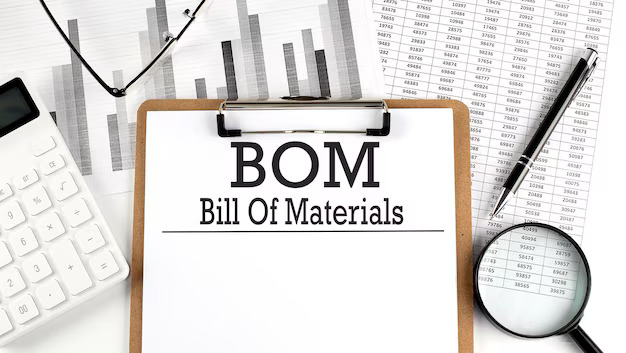
If you’re involved in the manufacturing business, the term Bill of Material is probably something you hear often.
So, what exactly is a Bill of Material? This term is often abbreviated as BOM and plays an important role in the production process.
If you want to understand it more deeply, let’s go through a complete discussion of the definition, types, and benefits of a Bill of Material. Read until the end so this article can be useful for you!
Definition of Bill of Material
Source: https://www.instagram.com/esb.id
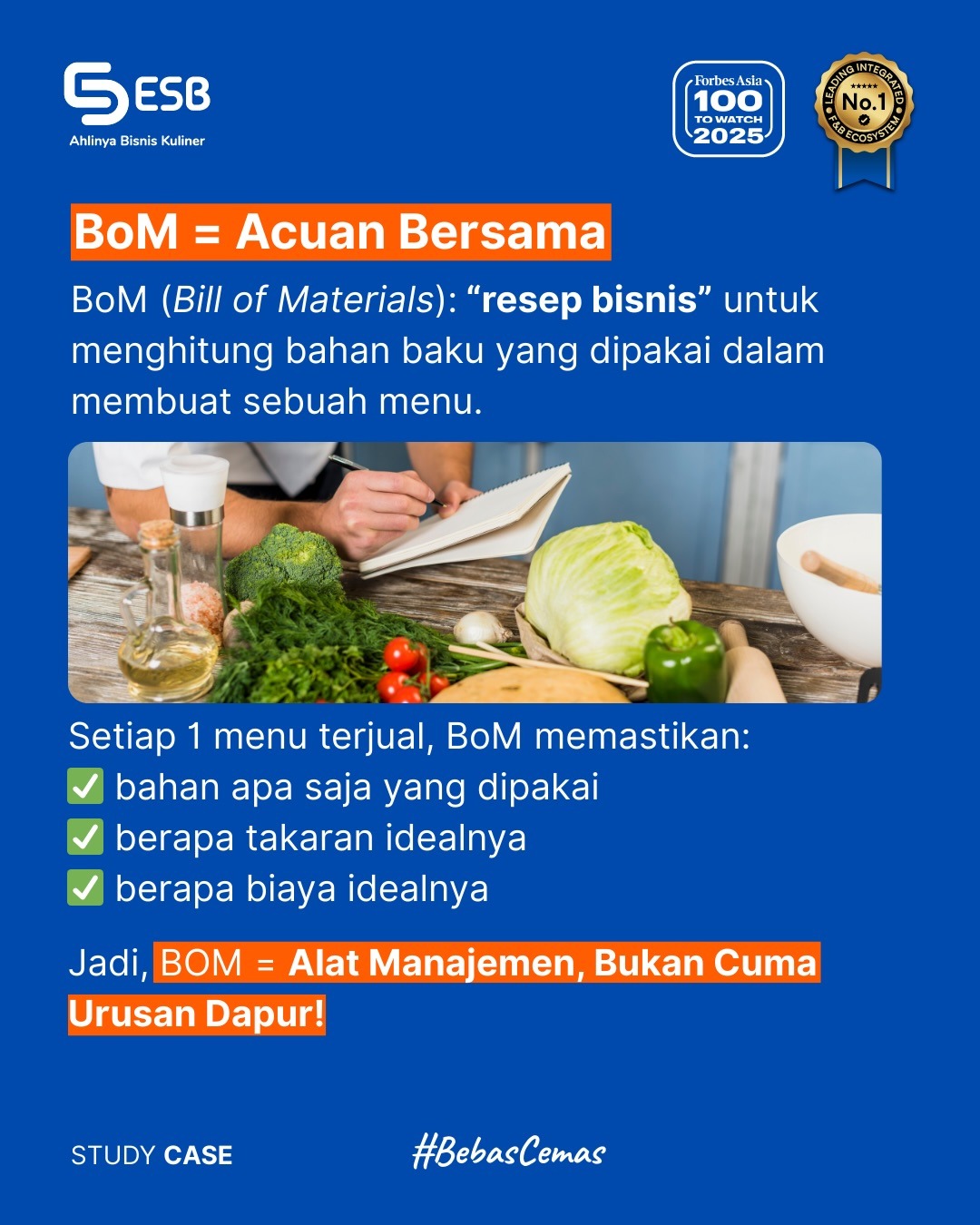
A Bill of Material is a complete list containing the raw materials, components, and instructions needed to make a product. BOM is not just an ordinary list.
In other words, BOM is an essential guide that ensures the production process runs smoothly from start to finish. Think of it like baking a cake.
The recipe you use is similar to a BOM. All the ingredients needed, from flour and sugar to butter, are clearly listed.
The same goes for the preparation steps. So, BOM is essentially a “recipe” for the manufacturing world.
What is a Bill of Material and What Does It Do?
In general, a Bill of Material is a tool that helps companies detail everything needed to produce an item. With a BOM, the production process becomes more organized.
For example, if there is an error in the raw materials, the BOM can help identify where the problem lies. You also don’t need to worry about raw material stock running out unexpectedly.
A BOM ensures that you have a complete record of what is needed and how much must be available.
Read also: 5 Essential Restaurant Kitchen Management Tips for Beginners
Types of Bill of Material
When talking about Bill of Material, there are actually several types you need to know.
Each type of BOM has a different function depending on the company’s needs. Let’s go through them one by one!
1. Manufacturing Bill of Material (MBOM)
This type is used in the manufacturing process. MBOM includes raw materials, sub-components, and even the tools needed to produce goods.
If your company focuses on production, MBOM is the type most commonly used.
2. Engineering Bill of Material (EBOM)
EBOM is more focused on product design. This type records all components based on technical specifications.
EBOM is usually created by the engineering team before the product is mass-produced.
3. Sales Bill of Material (SBOM)
SBOM is used for sales purposes. This BOM focuses on how the final product is offered to customers, including details of components that can be customized.
Benefits of Bill of Material
A Bill of Material (BOM) offers many benefits that make the production process in manufacturing companies more structured and effective.
If you’re curious about how BOM can help a business, let’s take a closer look below!
1. Optimizes the Production Process
Imagine cooking your favorite meal but realizing the ingredients are incomplete, it would be troublesome, right?
The same applies to product manufacturing. With a BOM, all required raw materials and components are neatly listed from the start.
This way, you won’t be confused about what’s missing. The production process can run more smoothly without unnecessary obstacles that waste time.
2. Reduces Production Errors
Small mistakes in production often lead to significant losses. For instance, using the wrong raw materials or installing the wrong components.
A Bill of Material acts as a guide to ensure that every production step is carried out correctly.
If something goes wrong, you can immediately check it against the BOM. Naturally, this helps minimize the risk of production failure.
3. Controls Production Costs
It is very important to know how much cost will be incurred during the production process.
A Bill of Material helps you calculate raw material requirements accurately.
From there, you can estimate the budget more effectively. Unnecessary spending can be reduced, allowing your business to remain profitable without wasting costs.
4. Simplifies Planning
The production process requires solid planning. A Bill of Material helps you create a structured work schedule.
You can know when raw materials must be prepared, how much is needed, and how long the production process will take.
5. Supports Decision-Making
Sometimes, you need to make quick decisions to solve production issues. For example, when the main raw material suddenly runs out, you need to find an alternative.
With a Bill of Material, you can immediately check other raw material requirements that are still available.
6. Improves Operational Efficiency
A Bill of Material also helps companies work more efficiently overall.
All data related to raw materials, components, and production instructions are well documented.
In short, a Bill of Material makes it easier for each department in a company to perform its responsibilities properly. There is no longer confusion or miscommunication between teams.
From all these benefits, it is clear that a Bill of Material is a key element for manufacturing companies.
When all processes are well organized, not only does product quality improve, but the company’s overall profitability also increases.
Especially if you integrate a Bill of Material with modern technology such as an ERP system. Everything becomes more practical and efficient!
Read more: The Importance of Good Operational Management in the Restaurant Business
Bill of Material for More Efficient Operations

Source: https://www.instagram.com/esb.id
Have you ever heard the term variance? Variance is the loss difference caused by imprecise material usage.
When accumulated, this difference can become quite significant, causing losses and making material stock run out faster.
This is exactly what Bill of Material recording aims to prevent.
Source: https://www.instagram.com/esb.id
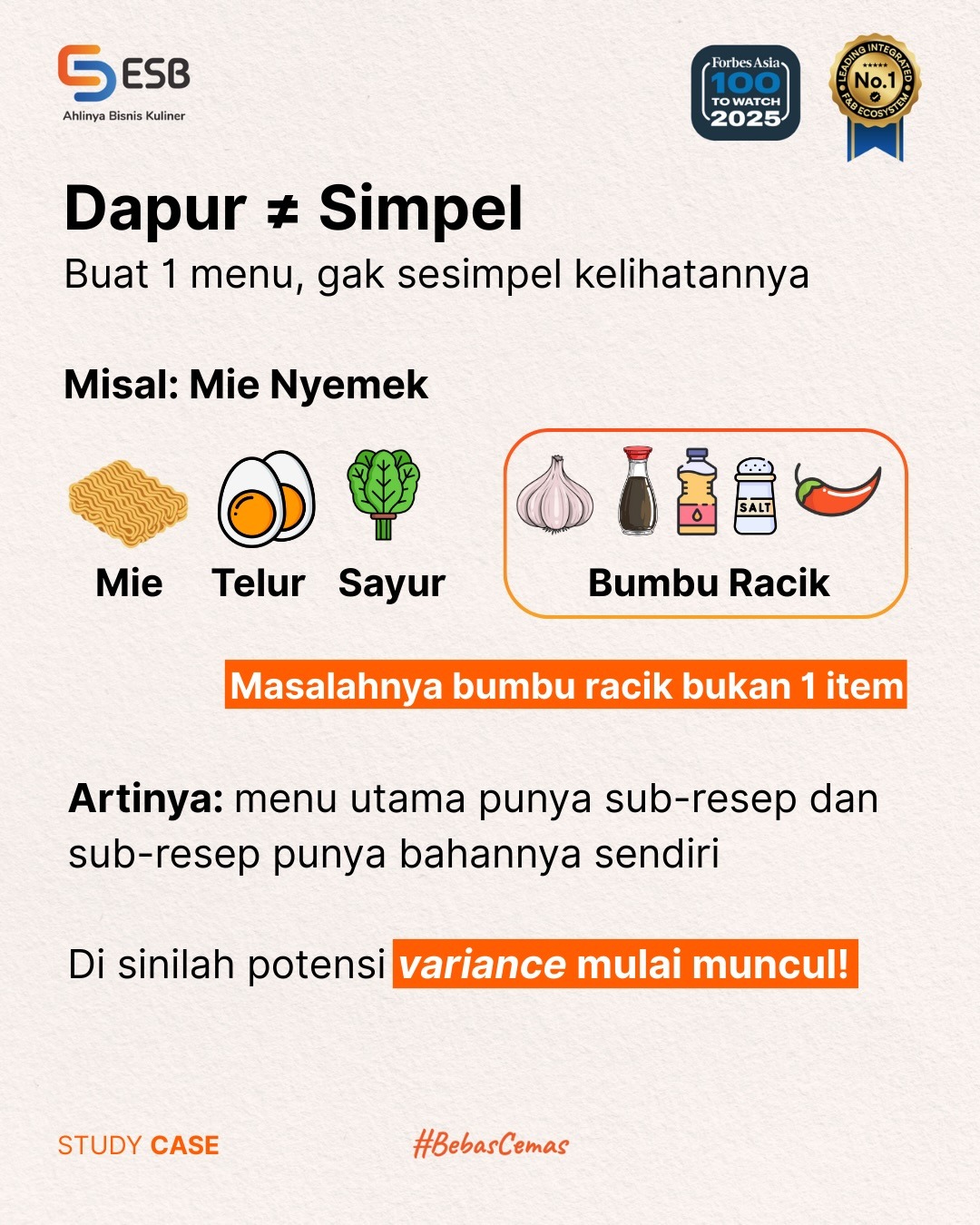
For example, one portion of mie nyemek requires 1 portion of noodles (100 grams), 1 egg, 30 grams of vegetables, and 1 portion of seasoning mix.
The seasoning mix itself consists of several ingredients, such as 5 grams of garlic, 10 ml of sweet soy sauce, 3 grams of chili, 2 grams of salt, and 5 ml of oil.
This standard is used as a reference so that every portion produced has the same taste and the ingredient cost can be properly controlled.
However, in practice, raw material usage often does not follow the standard.

Source: https://www.instagram.com/esb.id
For example, if there is a difference of just 5 grams per portion, it can add Rp300 in cost. If a restaurant sells 200 portions per day, you could lose Rp60,000 per day or Rp1.8 million per month.

Source: https://www.instagram.com/esb.id
This variance, or raw material discrepancy, will increase the cost of goods sold (COGS) per unit. As a result, profit margins decrease because production costs rise.
With a BOM, a company can operate based on the same standard. If a discrepancy occurs, the company can immediately detect and analyze the cause, making production more consistent, keeping raw material costs under control, and ensuring COGS stays aligned with the target.
The Difference Between Bill of Material and Other Production Documents
Many people are confused about the difference between BOM and other production documents, such as work plans or stock records. In fact, each document serves a different purpose. Here’s the difference:
- Bill of Material: Focuses on the raw materials and components needed for production.
- Work Plan: Focuses more on the production timeline.
- Stock Records: Used to monitor the availability of raw materials in the warehouse.
So, a BOM is like a map that guides you through the production process, while other documents act more as supporting tools.
Bill of Material (BOM) in the Culinary Business
Source: ESB
Although the term Bill of Material (BOM) is often used in manufacturing, the concept is highly relevant and crucial in the culinary business as well.
The difference is that while in manufacturing a BOM is used to assemble products, in the culinary business a BOM functions as a structured recipe directly connected to restaurant operations and finances.
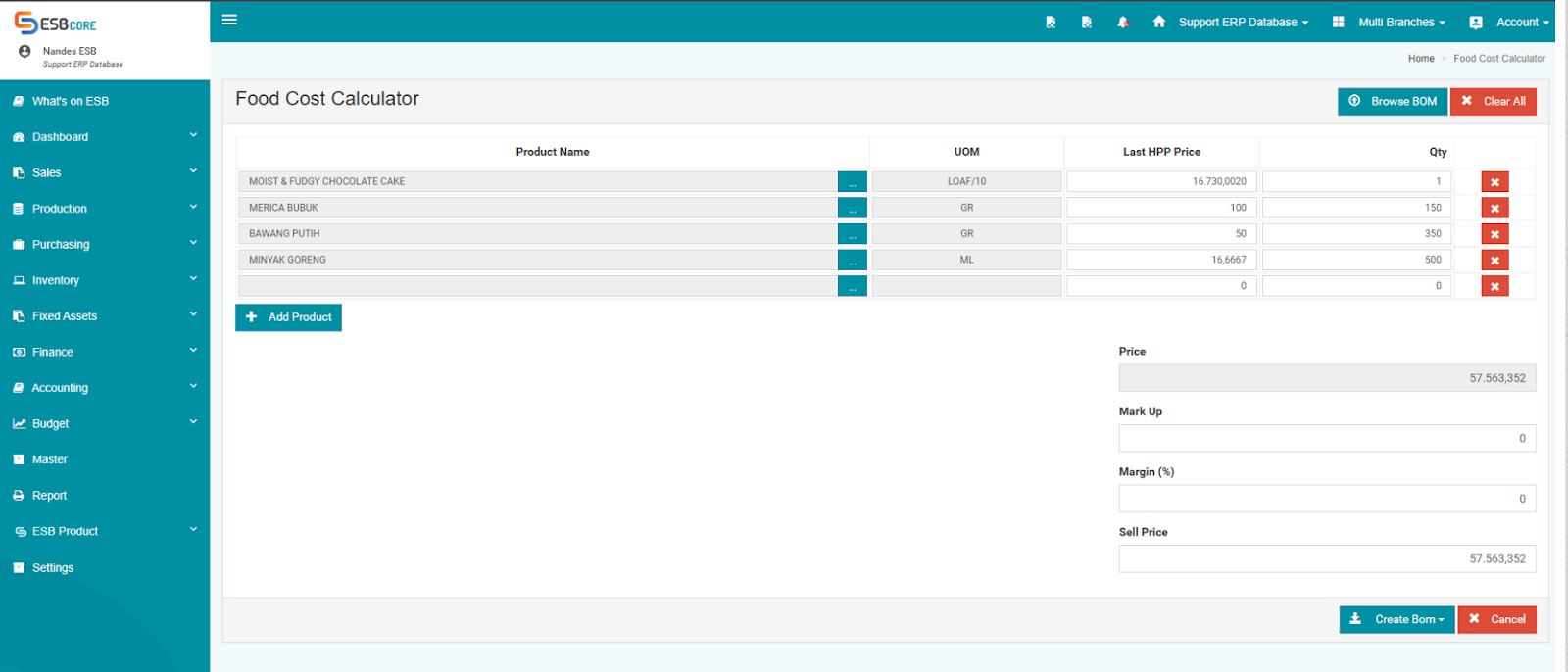
In the culinary business context, a BOM is a list of raw materials along with quantities and costs used to produce one menu item.
A BOM does not only record “what ingredients are used,” but also how much is used, the workflow, and how it affects stock and COGS.
For example, for one serving of Ayam Geprek Sambal Matah, the BOM would record:
- Raw chicken (grams)
- Flour
- Cooking oil
- Sambal matah (which may consist of shallots, chili, oil, and other seasonings)
When one serving is sold, the raw material stock will automatically decrease based on the BOM, and the cost of those ingredients will immediately be calculated as COGS.
This is what makes a BOM a crucial foundation for managing a restaurant in a neat and controlled way.
Why Is BOM Important for the Culinary Business?
Without a BOM, many restaurants face issues such as:
- Stock frequently runs out without knowing why
- COGS is inconsistent even though the menu is the same
- Difficulty identifying which menu items are the most profitable
- Kitchen costs leaking without notice.
With a digitally managed BOM, culinary business owners can:
- Control raw material usage with precision
- Maintain consistency in taste and cost across every outlet
- Know the exact COGS per menu item
- Make business decisions based on data, not assumptions.
Bill of Material for More Efficient Operations
Have you ever heard the term variance? Variance is the difference between the standard cost that has been set and the actual cost that occurs.
When accumulated, this difference can become large enough to cause losses and make stock run out faster. This is what Bill of Material recording aims to prevent.
For example, one serving of mie nyemek requires 1 portion of noodles (100 grams), 1 egg, 30 grams of vegetables, and 1 portion of seasoning mix.
The seasoning mix itself consists of several ingredients, such as 5 grams of garlic, 10 ml of sweet soy sauce, 3 grams of chili, 2 grams of salt, and 5 ml of oil.
This standard is used as a reference so that every portion produced has the same taste and the ingredient cost can be properly controlled. However, in practice, raw material usage often does not match the standard.
For example, if there is a difference of only 5 grams per portion, it can add Rp300 in cost. If a restaurant sells 200 portions per day, you could lose Rp60,000 per day or Rp1.8 million per month.
This variance, or raw material discrepancy, will affect the COGS per unit, making it higher. As a result, profit margins decline because production costs increase.
With a BOM, companies can work according to the same standard.
If a discrepancy occurs, the company can immediately detect and analyze the cause, so production remains consistent, raw material costs stay under control, and COGS remains on target.
Culinary BOM and ERP Systems
For BOM to be truly effective, its recording needs to be integrated with a digital system. Through an ERP system like ESB Core, BOM can be directly connected to:
- Inventory management
- Sales
- Semi-finished goods production
- Financial reports (COGS, profit and loss, and cash flow).
In this way, kitchen recipes become more than just cooking guides—they become business control tools that help restaurants grow more efficiently and sustainably.
FAQ Bill of Material (BOM)
1. What is a Bill of Material (BOM)?
A Bill of Material (BOM) is a complete list of raw materials, components, quantities, and instructions required to produce a product or menu item.
It serves as a structured guide to ensure production runs consistently, efficiently, and under control.
2. Apa fungsi utama Bill of Material dalam proses produksi?
The main function of a BOM is to help businesses plan material requirements, standardize production, control costs, reduce errors, and maintain consistent product quality. It also helps ensure the right stock is available at the right time.
3. What are the main types of Bill of Material?
There are three common types of BOM:
- Manufacturing BOM (MBOM): used for production processes
- Engineering BOM (EBOM): used for product design and technical specifications
- Sales BOM (SBOM): used for sales configuration and product offering.
4. Apakah Bill of Material hanya digunakan di industri manufaktur?
No. Although BOM is commonly associated with manufacturing, it is also highly relevant in the culinary business.
In restaurants, BOM functions like a structured recipe that records ingredients, measurements, and costs for each menu item.
5. How does BOM work in a restaurant or culinary business?
In a restaurant, BOM records the ingredients, portion sizes, and cost structure of each menu item.
When a dish is sold, stock can be automatically reduced based on the BOM, and the ingredient cost can be calculated directly into cost of goods sold (COGS).
6. Why is BOM important for restaurants?
BOM helps restaurants control ingredient usage, maintain taste consistency, calculate accurate COGS, prevent stock discrepancies, and identify which menu items are profitable.
Without BOM, businesses may face hidden kitchen leakage and inconsistent margins.
7. What is variance in BOM management?
Variance refers to the difference between the standard quantity or cost set in the BOM and the actual quantity or cost used in daily operations.
If not monitored, variance can increase food costs, reduce profit margins, and cause raw materials to run out faster than expected.
8. How does BOM help control COGS?
BOM sets a standard for how much of each ingredient should be used per product or menu item.
By comparing actual usage to that standard, businesses can track discrepancies, prevent overuse, and keep COGS aligned with targets.
9. Why should BOM be managed through an ERP system?
Managing BOM through an ERP system makes the process more accurate and efficient because it can be directly integrated with inventory, sales, production, and financial reporting.
This allows businesses to monitor stock in real time, calculate COGS automatically, and make data-based decisions.
10. How can ESB Core help manage BOM?
ESB Core helps businesses manage BOM digitally by connecting recipe standards, inventory movement, sales transactions, and financial reports in one integrated system.
This makes operations more efficient, transparent, and scalable, especially for culinary businesses.
Conclusion
Managing a Bill of Material (BOM) manually is no longer effective, especially for businesses that want to grow in a more organized and controlled way.
With a digital system, BOM not only serves as a raw material record, but also as a foundation for controlling stock, calculating COGS accurately, and making data-driven business decisions.
Through an ERP system like ESB Core, BOM management is directly integrated with inventory, sales, production, and financial reports.
As a result, business operations become more efficient, transparent, and ready to scale.
Learn more about how ESB Core helps your business manage BOM and overall operations comprehensively.
Contact the ESB Team for a consultation and discover an ERP solution that fits your culinary business needs.


